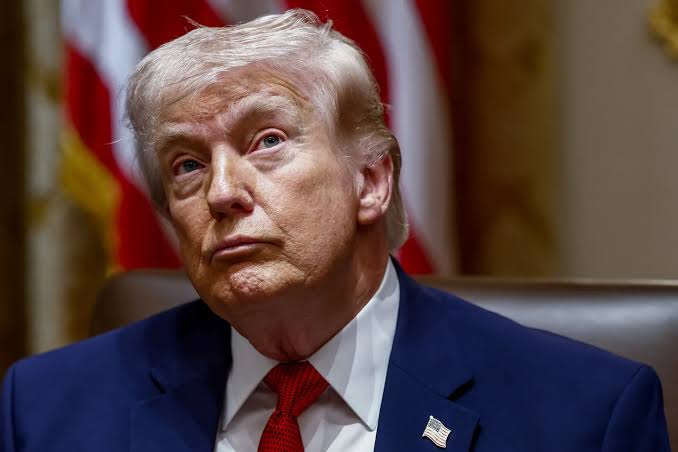
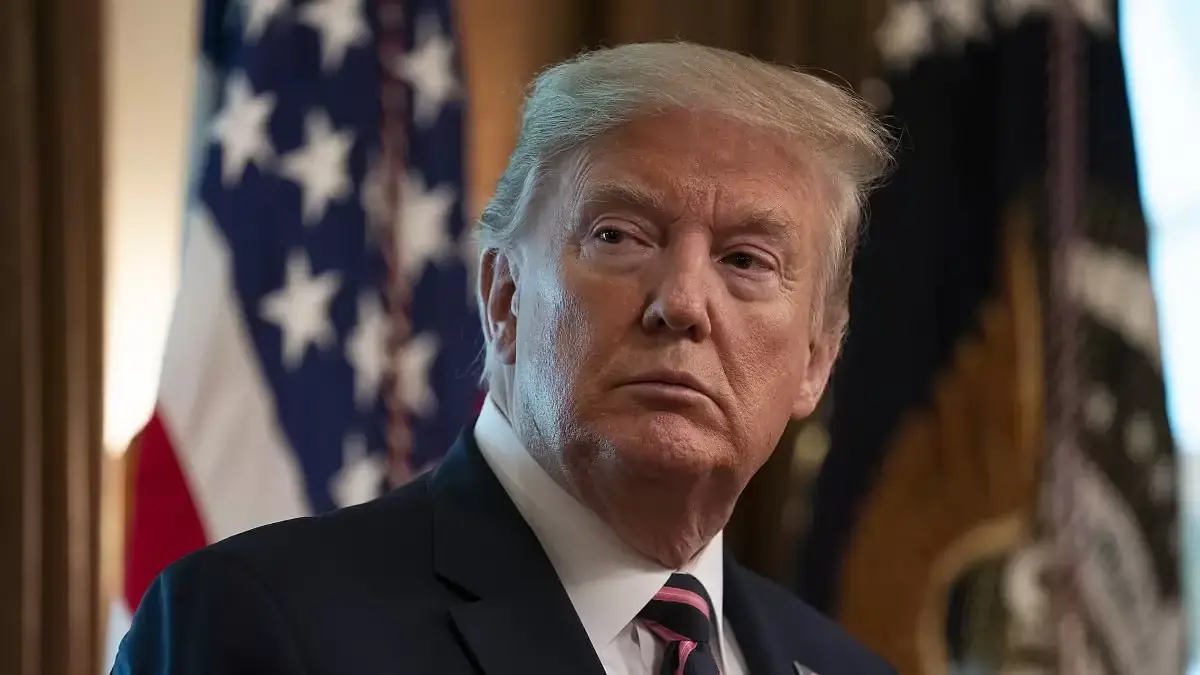
A new report by The Washington Post has added a dramatic twist to Venezuela’s fast-moving political crisis, claiming that US President Donald Trump is reluctant to endorse opposition leader Maria Corina Machado—not over policy differences, but because she accepted the 2025 Nobel Peace Prize, an honour Trump had openly sought for himself.
What happened?
Citing two unnamed sources close to the White House, the Washington Post reported that Trump was personally upset by Machado’s decision to accept the Nobel Prize. One source described it as the “ultimate sin,” while another claimed the move cost her Trump’s backing at a critical moment in Venezuela’s transition.
According to the report, one insider went as far as saying:
“If she had turned it down and said, ‘I can’t accept it because it’s Donald Trump’s,’ she’d be the president of Venezuela today.”
Why does Trump matter in Venezuela right now?
Machado’s global standing rose sharply after the US-led military strikes in Venezuela and the capture of President Nicolás Maduro and First Lady Cilia Flores, who were reportedly flown out of Caracas by American forces. With Maduro removed, many expected Washington to quickly back Machado as the face of a new political order.
However, Trump recently dampened those expectations, stating that the US would not allow anyone to take over where Maduro “left off,” signalling a cautious—and controlled—approach to regime change.
Why is Maria Corina Machado back in focus?
Machado, a long-time opposition figure, won the 2025 Nobel Peace Prize for her role in resisting authoritarian rule and advocating democratic reforms in Venezuela. Her award coincided with Trump’s repeated public claims that he deserved the Nobel for allegedly helping resolve multiple global conflicts in 2025.
Despite losing the prize to Machado, Trump had strong backing from supporters and allies for his nomination—making the outcome a personal and political setback.
How has Machado responded?
Interestingly, Machado has not publicly criticised Trump. Instead, she welcomed US action against Maduro, posting on X:
“It’s TIME FOR FREEDOM! Venezuelans, starting today, Nicolás Maduro faces international justice for the heinous crimes committed against Venezuelans and citizens of many other nations.”
Machado is currently believed to be in Oslo, Norway, where she travelled last month to receive her Nobel Prize. Reports say her exit from Venezuela involved disguises, dangerous sea crossings, and an international evacuation after more than a year in hiding.
What happens next in Venezuela?
With Maduro’s capture confirmed, attention is now shifting to elections. However, Trump has made it clear that elections are not the immediate priority. Speaking to the media on Monday, he said the focus is on “fixing” Venezuela first—a position echoed by US Secretary of State Marco Rubio, who called elections “premature” at this stage.
Trump also issued a warning, saying the US could carry out a second strike in Venezuela “if they don’t behave,” underlining Washington’s continued hardline stance.
Interesting Read
The bigger picture
The episode highlights how personal politics, global recognition, and geopolitical power are colliding in Venezuela’s transition. While Machado remains a symbol of democratic resistance, Trump’s reluctance to endorse her shows that international backing may depend as much on personal equations as on political credentials.
As Venezuela waits for clarity on leadership and elections, one thing is clear: the country’s future is being shaped not just in Caracas—but also in Washington.