The investigation into the tragic plane crash near Baramati that claimed the lives of Maharashtra Deputy Chief Minister Ajit Pawar and four others is intensifying, with aviation authorities examining multiple technical and environmental factors that may have contributed to the disaster.
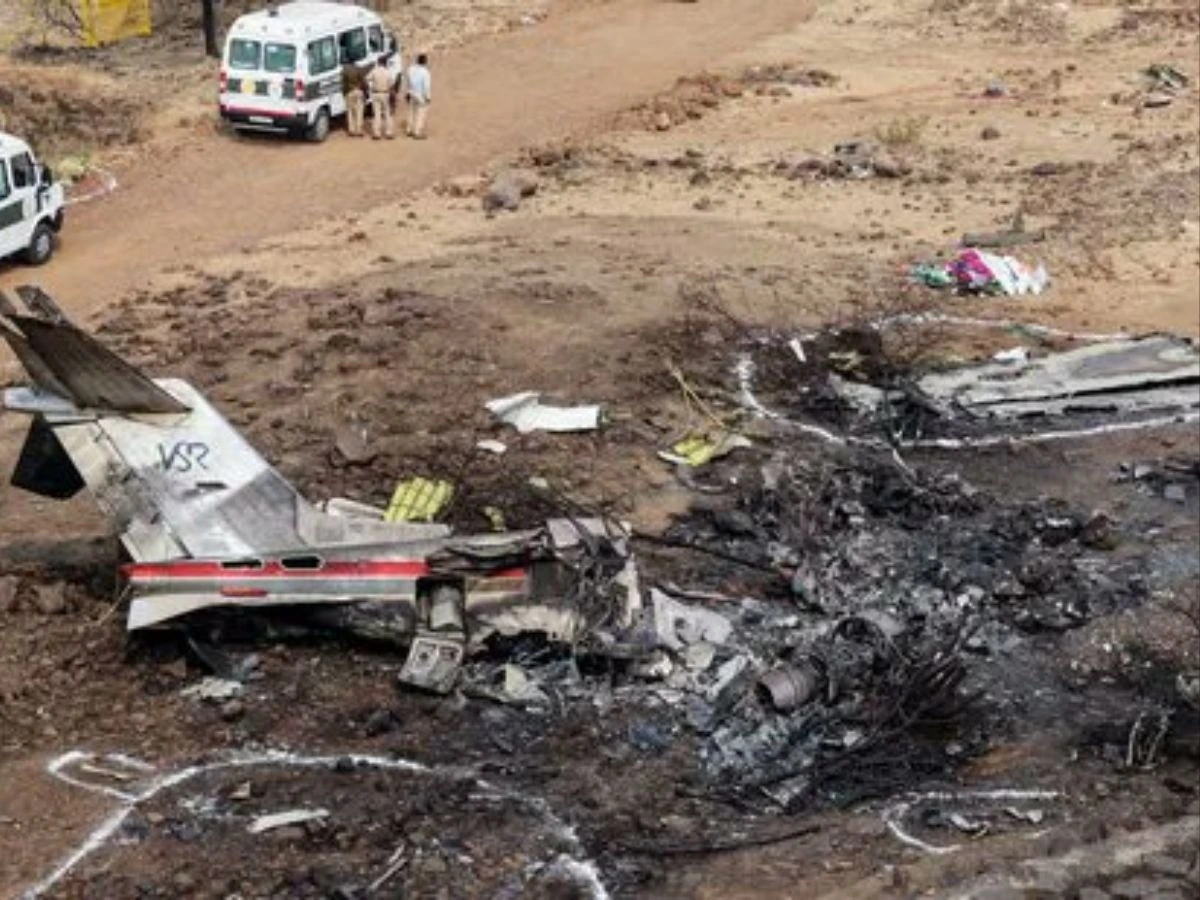
The aircraft, a VT-SSK Learjet 45 business jet, crashed on Wednesday just 200 metres short of the tabletop runway at Baramati airport, erupting into flames on impact. The wreckage was completely charred, leaving little visible evidence at the crash site.
With the black box recovered and a three-member Aircraft Accident Investigation Bureau (AAIB) team leading the probe, investigators are now focusing on flight data, cockpit communication, and newly surfaced CCTV footage capturing the aircraft’s final moments.
CCTV Footage Provides Crucial Clues
CCTV footage from near the airport has emerged as a critical piece of evidence. The visuals appear to show the aircraft descending normally before its left wing drops suddenly, followed by a sharp banking manoeuvre moments before impact.
Aviation experts caution that while such footage cannot establish the exact cause of the crash, it does indicate a loss of control at very low altitude, a phase of flight where recovery options are extremely limited.
Based on preliminary assessments, investigators are examining three primary theories.
Theory One: Aerodynamic Stall During Final Approach
One of the most closely examined possibilities is an asymmetric aerodynamic stall, a dangerous condition in which one wing loses lift before the other.
An aerodynamic stall occurs when an aircraft’s speed becomes too low or the angle of attack exceeds critical limits, preventing the wings from producing sufficient lift. When this happens asymmetrically, the aircraft can roll abruptly to one side.
The Learjet 45’s tail-mounted engine design increases sensitivity during low-speed manoeuvres, particularly during visual approaches. According to global aviation safety data, similar business jets have been involved in fatal crashes during approach phases when crews exceeded the critical angle of attack.
The US National Transportation Safety Board (NTSB) has documented multiple such cases since 2014, including:
- Phenom 100 crash in Maryland (2014)
- Learjet 35A crash in New Jersey (2017)
- Challenger 605 crash in California (2021)
In each instance, the aircraft entered an uncontrolled roll at low altitude, leaving no room for recovery.
Investigators are also examining reports that the Learjet attempted an initial approach before executing a go-around, followed by a second and final approach. Such manoeuvres increase pilot workload and heighten the risk of speed mismanagement.
CS Randhawa, President of the Federation of Indian Pilots, said the footage is consistent with a stall scenario.
“At low speeds, if the aircraft crosses the critical angle of attack, lift reduces sharply while drag increases. This can lead to a wingtip stall and sudden roll. The aircraft’s warning systems would have activated, and this will be evident in the flight data and cockpit recordings,” he said.
Theory Two: Possible Engine Failure
Investigators are also evaluating the possibility of an engine failure during the final approach.
According to the Federal Aviation Administration (FAA), the loss of power in one engine can cause:
- Yaw, due to asymmetric thrust
- Roll, resulting from uneven lift distribution
Pilots must counter these forces using rudder and aileron inputs. At low altitude and reduced speed, this becomes significantly more challenging.
Some aviation analysts believe the aircraft’s sudden turn could align with a single-engine failure. However, experts note that this scenario is less likely, as there was no mayday or distress call from the cockpit despite a brief window between landing clearance and the crash.
Aviation consultant Mark D. Martin explained that while engine failure remains a possibility, flight data will be decisive.
“The Learjet 45 is a high-performance aircraft that does not tolerate low-speed errors well. If one engine failed close to the ground, the remaining engine’s thrust could pull the aircraft off course. Whether that occurred will be confirmed by engine and thrust data,” he said.
Theory Three: Late Runway Sighting and Visual Approach Challenges
The third theory focuses on airport infrastructure and environmental conditions.
Baramati airport does not have instrument landing systems or precision navigation aids, meaning pilots must rely entirely on visual approaches. Such approaches require continuous and clear visibility of the runway.
Aviation safety experts believe sun glare or delayed runway sighting may have caused the crew to realise too late that the aircraft was misaligned with the runway, prompting a steep banking manoeuvre in the final seconds.
“A visual approach requires the runway to be clearly visible. If the crew identified alignment issues too late, any sharp corrective turn at low speed would significantly increase stall risk,” said aviation safety expert Amit Singh.
A senior pilot, speaking anonymously, echoed the concern.
“It appears to be a case of late runway viewing followed by an aggressive attempt to align with the runway. At that height and speed, such manoeuvres can be unforgiving,” the pilot said.
What Investigators Will Determine Next
The definitive cause of the crash will be established through detailed analysis of:
- Flight Data Recorder (FDR) readings, including speed, altitude, angle of attack, and engine performance
- Cockpit Voice Recorder (CVR) audio, revealing pilot communication, warnings, and decision-making
Investigators will also review air traffic control clearances, weather conditions, and airport infrastructure limitations.
Officials have emphasised that only a comprehensive examination of all data will determine whether the crash resulted from pilot error, mechanical failure, environmental factors, or a combination of causes.
Interesting Read
Ajit Pawar death: Zilla Parishad polls in 12 districts, including Pune, postponed to Feb 7
Trump Doubles Down on Greenland Takeover, Island Warns of Possible US Military Action
A Tragedy Under Close Scrutiny
As the nation mourns the loss of a senior political leader, the investigation into the Baramati crash has drawn renewed attention to aviation safety at smaller airports, particularly those dependent on visual approaches.
Until the AAIB completes its probe and releases its findings, the precise sequence of events remains under investigation. What is clear, however, is that the final moments of the flight unfolded under conditions where seconds mattered—and the margin for error was minimal.