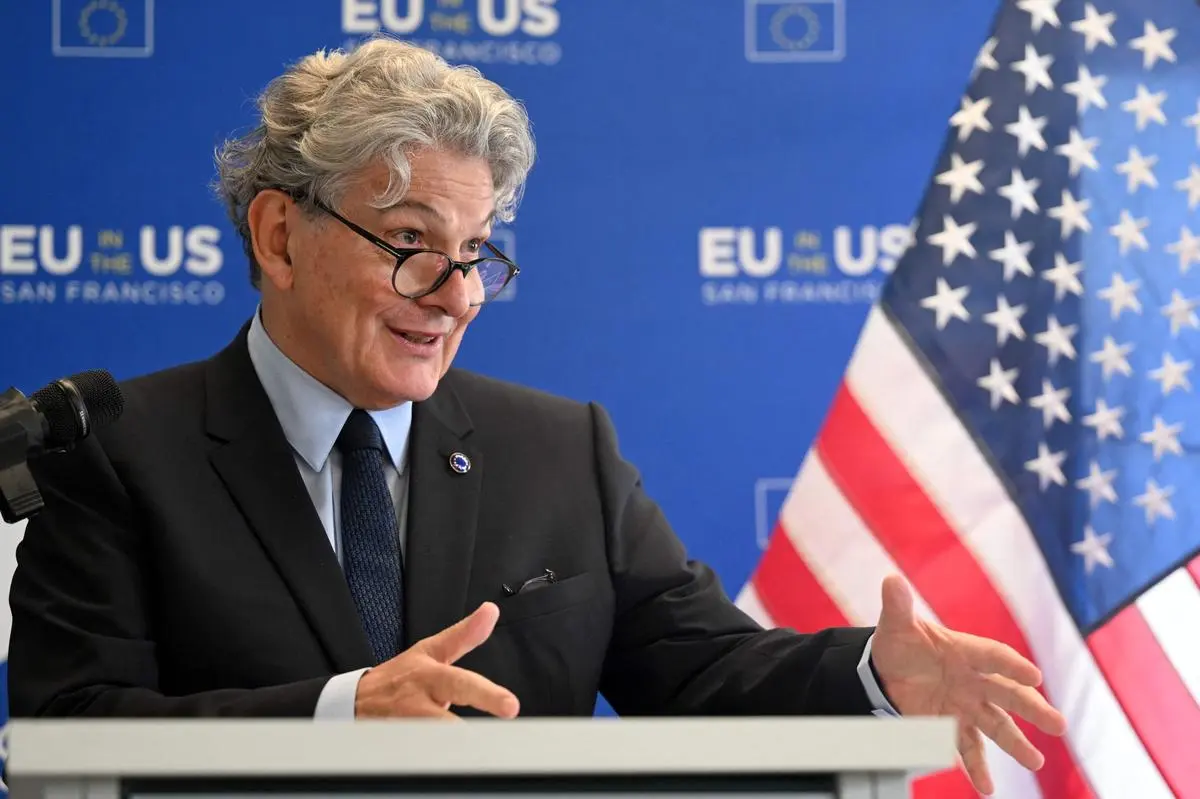
The European Union has strongly condemned the United States after Washington imposed visa sanctions on five European figures involved in regulating global tech companies, escalating a growing transatlantic dispute over online censorship, free speech and big tech regulation.
Among those targeted is former European Commissioner Thierry Breton, a key architect of the EU’s landmark Digital Services Act (DSA). The move has drawn sharp reactions from France, Germany and Spain, with European leaders warning that the sanctions threaten Europe’s regulatory autonomy and digital sovereignty.
What Triggered the US Sanctions?
The US State Department announced on Tuesday that it would deny visas to five Europeans, accusing them of attempting to “coerce” American social media platforms into censoring viewpoints they oppose.
US Secretary of State Marco Rubio, posting on X, said the Trump administration would no longer tolerate what it called “extraterritorial censorship,” a direct reference to the DSA. The law has long been criticised by US conservatives, who claim it restricts free speech—an allegation the EU strongly denies.
Washington has described Thierry Breton as the “mastermind” behind the DSA. During his tenure as the EU’s top tech regulator, Breton frequently clashed with tech billionaires, including Elon Musk, over compliance with European digital rules.
EU Responds: ‘Unjustified and Unacceptable’
The European Commission reacted swiftly, stating that it had formally requested clarifications from US authorities and warned it would respond “decisively” if necessary.
“Our digital rules ensure a safe, fair and level playing field for all companies, applied without discrimination,” the Commission said, stressing that EU laws are democratically adopted and legally grounded.
French President Emmanuel Macron condemned the visa bans, calling them “measures of intimidation and coercion” aimed at weakening Europe’s digital authority. Germany’s Foreign Minister Johann Wadephul said the sanctions were “not acceptable,” underlining that the DSA applies only within the EU and has no extraterritorial effect.
Spain’s foreign ministry also criticised the US move, stating that a safe digital environment free from illegal content and disinformation is a fundamental pillar of democracy.
What Is the Digital Services Act?
The Digital Services Act, which came into force in 2024, governs how major online platforms operate within the EU’s 450-million-strong market. The law requires big tech companies to:
- Explain content moderation decisions
- Increase transparency for users
- Allow independent researchers access to platform data
- Reduce exposure to harmful and illegal content, especially for children
Failure to comply can result in fines of up to 6% of a company’s global annual revenue, making it one of the world’s toughest digital regulations.
Who Else Was Targeted?
In addition to Breton, the US visa ban includes:
- Imran Ahmed, head of the UK-based Center for Countering Digital Hate
- Anna-Lena von Hodenberg and Josephine Ballon of Germany’s HateAid
- Clare Melford, leader of the UK-based Global Disinformation Index (GDI)
HateAid called the sanctions an “act of repression,” while GDI described them as “immoral, unlawful and un-American.”
Interesting Read
Trump’s 100% Drug Tariff Spares Generics, But India Faces Uncertain Fallout
Breton Calls It a ‘Political Witch Hunt’
Responding on X, Breton dismissed the sanctions as a political “witch hunt,” saying: “To our American friends — censorship isn’t where you think it is.”
His successor, Stéphane Séjourné, reinforced Europe’s stance, declaring that “no sanction will silence the sovereignty of the European peoples.”
Why This Matters Globally
The dispute highlights a deepening global divide over digital governance, free speech and the power of social media platforms. As governments worldwide attempt to regulate big tech, the EU’s model is increasingly becoming a global reference point—while also facing mounting resistance from US political and corporate interests.
With the DSA now fully operational, analysts warn that EU-US tensions over tech regulation are likely to intensify, shaping the future of global internet governance.