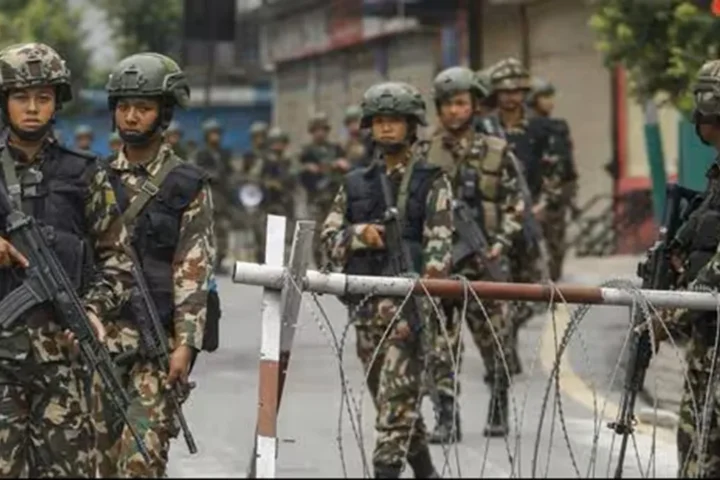
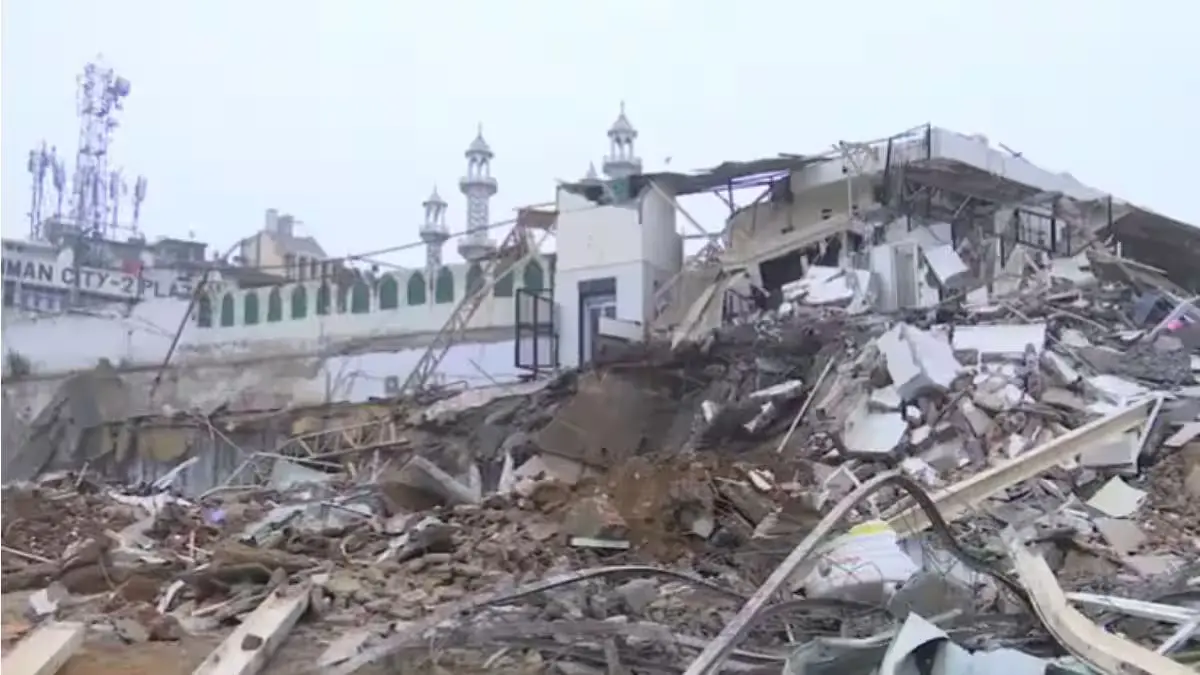
An anti-encroachment demolition drive carried out by the Municipal Corporation of Delhi (MCD) near the historic Faiz-e-Elahi Mosque at Turkman Gate, Ramlila Maidan, turned violent in the early hours of Wednesday, triggering clashes between locals and security forces. The incident left at least five police personnel injured, led to the detention of five people, and prompted heavy deployment of police and Rapid Action Force (RAF) in the area.
What Happened?
The demolition drive, originally scheduled to begin at 8:00 am, was unexpectedly launched at 1:30 am, catching local residents off guard. As MCD bulldozers and earth-moving machines arrived to clear alleged encroachments on land adjoining the mosque and a nearby graveyard, around 100–150 people gathered at the site.
According to Delhi Police, while most onlookers were merely observing, a small group refused to disperse despite repeated warnings. Soon after, stone-pelting began, forcing the police to respond using tear gas shells and minimal force to regain control.
“The stone pelters were chased away within two to three minutes. The situation was swiftly brought under control,” said Joint Commissioner of Police (Central Range) Madhur Verma.
Injuries and Arrests
- Five police personnel sustained injuries during the clashes
- Five individuals have been detained, with police confirming that CCTV footage, body camera visuals, and ground videos are being reviewed
- Authorities say more arrests may follow as miscreants are identified
Normalcy was restored shortly after the incident, police officials said.
Why Was the Demolition Carried Out?
The demolition drive stems from a Delhi High Court order issued in November, which directed authorities to clear approximately 38,940 square feet of encroached land at Ramlila Maidan near Turkman Gate within three months.
Following the court’s directive:
- The MCD issued notices on December 22, declaring that any construction beyond 0.195 acres was illegal
- The 0.195-acre area houses the mosque itself, which authorities claim has not been touched
- The remaining land allegedly contained unauthorised commercial establishments and structures
Officials stated that the managing committee of Masjid Syed Elahi and the Delhi Waqf Board failed to provide documentary evidence proving lawful ownership or possession of the additional land.
Mosque Committee’s Legal Challenge
Before the demolition, the mosque’s managing committee had filed a petition challenging the MCD’s action, arguing against the removal of structures adjacent to the mosque and graveyard. However, officials confirmed that the demolition proceeded strictly under court orders.
Deputy Commissioner Vivek Agarwal (City SP Zone) clarified:
“This action was taken after due legal process. The matter has been pending in the High Court for a long time.”
Government and Political Reactions
Delhi Minister Ashish Sood termed the violence “unfortunate” and issued a strong warning:
“Violence will not be tolerated. The Faiz-e-Elahi Mosque is completely safe. The action is limited only to illegal commercial structures under court orders.”
BJP leader Dilip Jaiswal echoed the sentiment, stating:
“Government land and transportation routes cannot be encroached upon—whether it involves a mosque or a temple.”
Security Measures Going Forward
- RAF and Delhi Police will continue to remain deployed in the area
- The locality has been divided into nine security zones, each monitored by senior officers
- Authorities say law-and-order arrangements will stay in place to prevent further unrest
Interesting Read
The Bottom Line
The Turkman Gate incident highlights the tension between urban encroachment removal and community sentiment, especially when religious sites are involved. While authorities insist the demolition followed legal and judicial directives, the sudden timing of the operation and ensuing violence have raised questions about communication, preparedness, and crowd management.
As investigations continue and more arrests are expected, all eyes remain on how the administration balances rule of law with public trust in one of Delhi’s most sensitive zones.