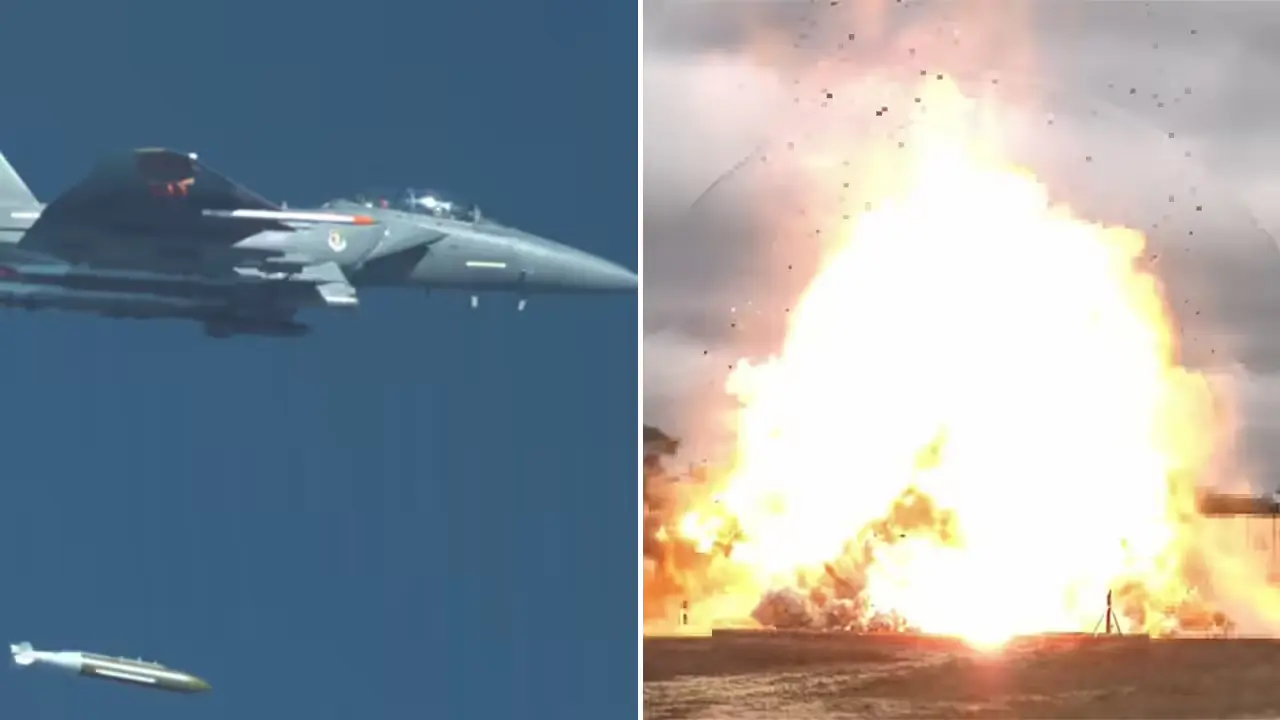
The United States has carried out a series of high-impact airstrikes on Iranian missile installations near the Strait of Hormuz, deploying 5,000-pound “bunker buster” bombs in what marks a significant escalation in the ongoing conflict.
According to the US Central Command, the strikes targeted hardened anti-ship missile sites along Iran’s coastline, which were assessed to pose a direct threat to international shipping in one of the world’s most critical energy corridors.
Strategic Importance of the Strait of Hormuz
The Strait of Hormuz is a vital global oil transit route, handling nearly one-fifth of the world’s total oil supply. Any disruption in this narrow waterway has immediate consequences for global energy markets and trade.
Recent developments suggest Iran has attempted to restrict movement through the strait, raising concerns among major economies dependent on uninterrupted oil flow.
Details of the US Airstrikes
US officials confirmed the use of deep penetrator munitions, commonly referred to as bunker busters, designed to destroy fortified underground targets.
The strikes focused on:
- Coastal missile launch facilities
- Hardened military infrastructure
- Anti-ship weapon systems
Military sources indicated that these sites were capable of targeting commercial vessels and naval assets operating in and around the Strait of Hormuz.
Iran’s Military Strategy: Asymmetric and Multi-Layered
Iran’s response strategy reflects a broader doctrine of asymmetric warfare, where it avoids direct large-scale confrontation and instead focuses on sustained pressure.
Key elements of Iran’s approach include:
- Deployment of anti-ship cruise missiles
- Use of naval mines in strategic waters
- Drone and surveillance operations
- Fast attack boats employing swarm tactics
This layered defense system is designed to complicate US military operations and increase risks for maritime activity.
Economic Impact: Oil Supply and Global Markets at Risk
The escalating tensions have heightened fears of disruption to global oil supply chains.
Any prolonged instability in the Strait of Hormuz could:
- Drive up international oil prices
- Disrupt shipping and logistics networks
- Impact economies dependent on energy imports
Analysts warn that the conflict could evolve into a broader economic confrontation, affecting markets worldwide.
Concerns Over Nuclear Safety
Amid the escalating conflict, a projectile was reported near the Bushehr Nuclear Power Plant.
The International Atomic Energy Agency confirmed that there was no damage to the facility and no casualties, but reiterated calls for restraint to prevent the risk of a nuclear incident.
Regional Escalation and Retaliation
Iran has intensified its response with missile and drone attacks targeting Israel and parts of the Gulf region. Several of these attacks were intercepted by defense systems, though casualties have been reported.
The situation further escalated following the reported killing of senior Iranian figure Ali Larijani in recent strikes, triggering a new wave of retaliation.
Interesting Read
Iran Signals Long-Term Shift in Conflict
Iranian leadership has indicated that the situation in the Strait of is unlikely to return to its previous state. Mohammad Baqer Qalibaf stated that the region is entering a new phase of geopolitical tension.
This suggests that the current conflict may not be short-lived, with both sides preparing for prolonged engagement.
Global Implications
The developments in the Strait of Hormuz have far-reaching consequences beyond the immediate region.
- Energy markets remain volatile
- Shipping routes face ongoing threats
- The risk of wider regional conflict continues to grow
As tensions escalate, the international community is closely monitoring the situation, with calls for diplomatic intervention to prevent further destabilization.