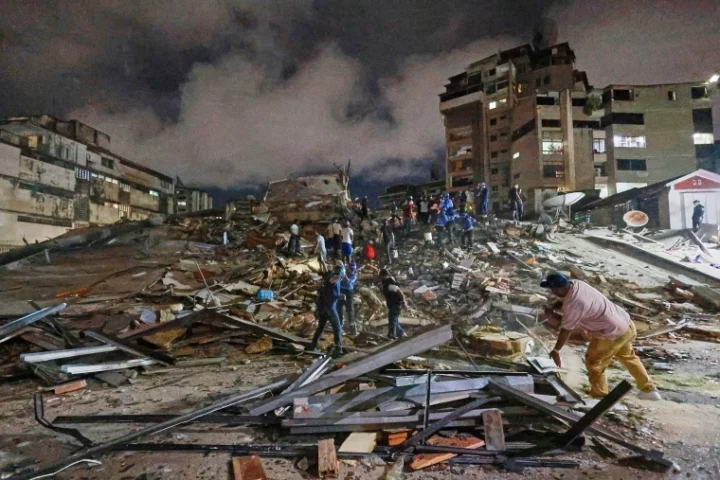
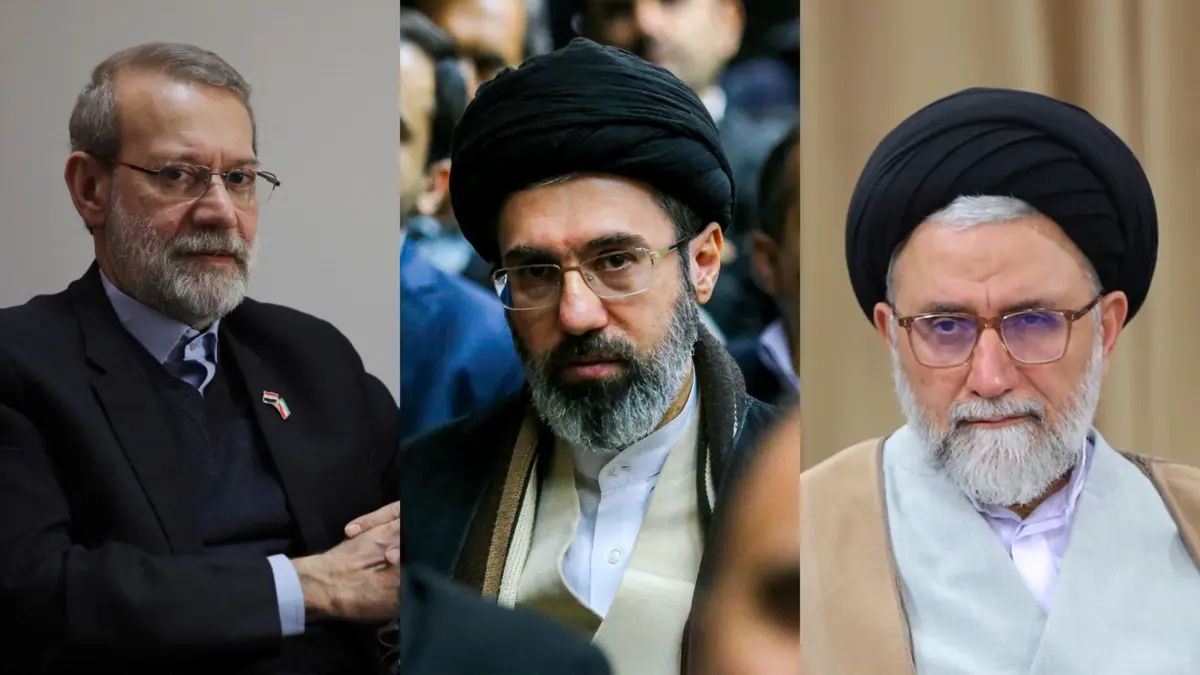
With Iran’s top leadership hit by deadly strikes, questions grow over who truly controls the country as the crisis deepens.
A series of targeted strikes by the United States and Israel has shaken Iran’s power structure, killing Supreme Leader Ali Khamenei and senior political figure Ali Larijani. The developments have created a leadership vacuum at the highest level, raising urgent questions about governance and control in Tehran.
Succession Uncertainty Clouds Leadership
Following Khamenei’s death, his son Mojtaba Khamenei has reportedly been elevated as the new Supreme Leader. While he has long been viewed as a potential successor, his sudden rise comes under unusual and unclear circumstances.
Key concerns remain:
- He has not made any public appearance since the attack
- Reports suggest he may have been injured during the strike
- There is no official confirmation of his current condition or authority
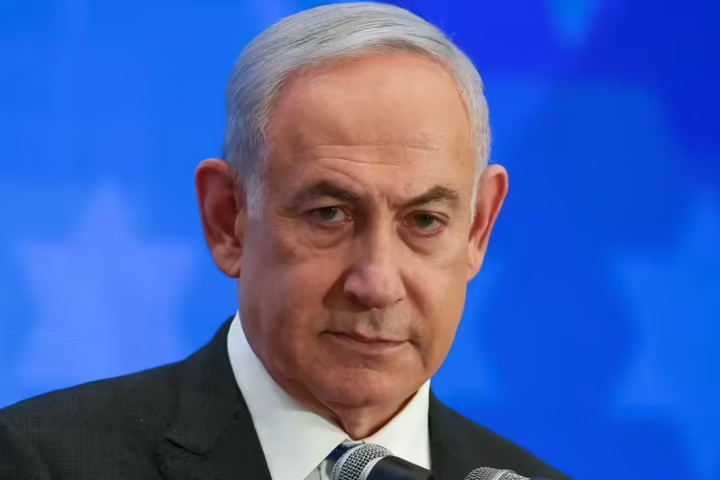
Israeli Prime Minister Benjamin Netanyahu publicly questioned Iran’s leadership clarity, stating uncertainty over who is in charge. Similarly, US President Donald Trump indicated that even intelligence agencies have not confirmed Mojtaba’s status.
IRGC Steps Into the Spotlight
Amid this uncertainty, the Islamic Revolutionary Guard Corps (IRGC) is increasingly being viewed as the most powerful force in Iran.
Traditionally operating alongside civilian leadership, the IRGC already holds significant influence across:
- National security and military operations
- Political decision-making
- Economic networks
With the top leadership weakened, analysts believe the IRGC is now effectively steering the country’s direction.
Ali Vaez of the International Crisis Group noted that the balance of power has shifted significantly, suggesting that the Revolutionary Guard may now function as the central authority.
Decentralised Military Adds Complexity
Adding to the situation, Iran’s Foreign Minister Abbas Araghchi previously indicated that some military units are operating independently.
This points to a decentralised system where:
- Units follow pre-established strategic instructions
- Command structures may be fragmented but functional
- Operations continue even without direct top-level coordination
Such a model allows continuity, even in the absence of clear leadership visibility.
System Designed to Withstand Shock
Despite the scale of the losses, experts caution against assuming immediate instability or collapse.
Iran’s political system, shaped after the Iranian Revolution, was built with multiple layers of leadership to ensure continuity. This structure enables:
- Replacement of senior leaders from within established ranks
- Continuity of governance through institutional strength
- Gradual transitions rather than sudden breakdowns
Analysts stress that what is unfolding is less about collapse and more about a shift in how power is exercised.
Interesting Read
A Turning Point for Iran
Iran now faces a critical phase marked by:
- An uncertain and largely unseen Supreme Leader
- A strengthened IRGC influence
- A decentralised operational framework
- A slow but significant transformation of power dynamics
Conclusion:
While Mojtaba Khamenei is officially positioned at the top, the real authority in Iran may increasingly rest with the Islamic Revolutionary Guard Corps. The situation remains fluid, and the full impact of these changes is likely to unfold over time.