Venezuela Devastated by Powerful Earthquakes as Rescue Operations Continue Amid Rising Casualties
A Nation Grapples with One of Its Worst Natural Disasters in Recent Years
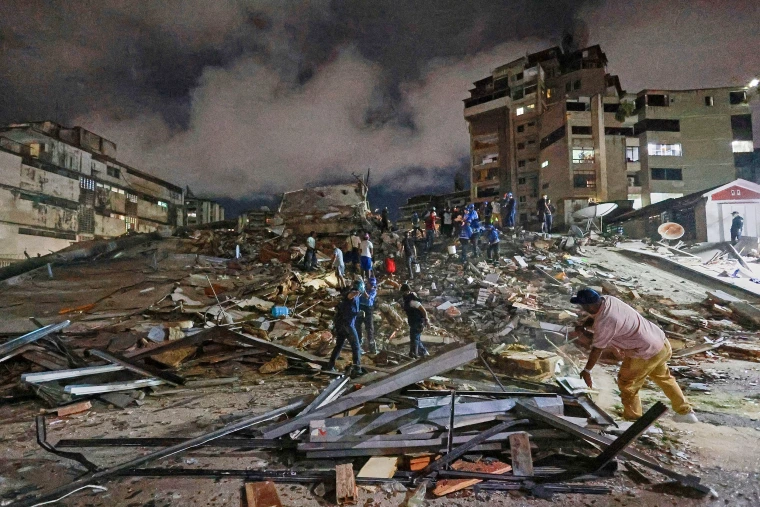
Venezuela is confronting a major humanitarian crisis after a series of powerful earthquakes struck the country, causing widespread destruction, significant loss of life, and severe damage to infrastructure. Rescue teams continue searching collapsed buildings for survivors while emergency authorities race to deliver medical aid, temporary shelter, and essential supplies to thousands of affected families.
The disaster has left communities across several regions struggling with damaged homes, disrupted public services, and persistent aftershocks. Hospitals have been overwhelmed with injured residents, while emergency workers, volunteers, and security forces continue rescue operations around the clock. In many neighborhoods, families have been forced to sleep outdoors or in temporary shelters as they wait for news about missing relatives and assess the damage to their homes.
Government officials declared a state of emergency in the hardest-hit areas, mobilizing national disaster response agencies and requesting coordinated support to assist rescue efforts and provide relief to displaced populations. Authorities have also urged residents to remain alert, avoid unstable structures, and follow official safety instructions as the situation continues to evolve.
Powerful Earthquakes Trigger Widespread Destruction
The earthquakes struck within a short span of time, sending strong tremors across multiple regions and catching many residents off guard. Buildings shook violently, roads developed cracks, and electricity and communication services were disrupted in several areas. In some places, the shaking was strong enough to send people rushing into the streets in panic, while others were trapped indoors as debris fell from ceilings and walls.
Many residential buildings, commercial establishments, schools, and public offices sustained structural damage. In densely populated neighborhoods, older buildings proved especially vulnerable, with several collapsing entirely or becoming unsafe for occupation. Even structures that remained standing may require extensive inspections before they can be safely used again.
The force of the earthquakes was felt far beyond the epicentral region, leading to evacuations in multiple cities as authorities assessed structural safety. Public squares, parks, and open spaces quickly became gathering points for frightened residents seeking shelter away from damaged buildings.
Emergency sirens, rescue vehicles, and helicopters quickly became part of the landscape as search-and-rescue teams rushed to affected locations. The scale of the destruction has made it difficult for officials to immediately assess the full extent of the damage, and the number of affected communities may continue to rise as more remote areas are reached.
Rescue Teams Continue Search for Survivors
One of the most critical phases following any major earthquake is the search for survivors trapped beneath collapsed structures.
Specialized rescue teams equipped with thermal imaging equipment, search cameras, trained dogs, and heavy machinery have been working continuously to locate survivors. These teams are carefully removing debris in unstable areas where even small movements can trigger further collapses.
Every hour remains crucial during rescue operations because survival chances decrease as time passes. Despite the difficult conditions, emergency responders remain hopeful that additional survivors may still be found beneath the debris. In many earthquake disasters, people have been rescued alive days after the initial tremors, which is why teams continue working with urgency and caution.
Volunteers from local communities have also joined rescue efforts, assisting with debris removal, distributing food and water, and supporting displaced families. Their presence has been especially important in neighborhoods where official rescue teams are stretched thin and local knowledge helps identify where people may still be trapped.
Medical personnel have established temporary treatment centers near the disaster zones to provide immediate care before transferring critically injured patients to hospitals. These field stations are helping reduce pressure on overcrowded emergency rooms and allowing doctors to prioritize the most severe cases.
Hospitals Face Immense Pressure
Healthcare facilities have experienced an overwhelming influx of patients suffering from fractures, head injuries, crush injuries, burns, and other trauma caused by collapsing structures. Many hospitals are operating beyond normal capacity, with staff members working long shifts under intense pressure.
Emergency departments have expanded treatment areas while medical professionals work extended shifts to accommodate the growing number of casualties. In some facilities, hallways and waiting areas have been converted into temporary treatment zones to handle the surge in patients.
Authorities have appealed for blood donations and additional medical supplies to ensure hospitals can continue providing lifesaving treatment. Supplies such as pain medication, antibiotics, IV fluids, bandages, and surgical equipment are in especially high demand.
Mental health professionals have also begun offering psychological support to survivors coping with trauma, grief, and anxiety following the disaster. Many residents are experiencing shock, sleeplessness, and fear of additional tremors, making emotional support an essential part of the response effort.
Government Declares Emergency Response
National authorities activated disaster management protocols shortly after the earthquakes struck.
Emergency agencies coordinated with military personnel, police forces, firefighters, and medical services to establish command centers and prioritize rescue operations. These command centers are helping direct resources to the most severely affected areas and improve communication between local and national authorities.
Temporary shelters have been opened to accommodate families whose homes were destroyed or declared unsafe. Schools, community centers, and sports facilities are among the locations being used to house displaced residents.
Government teams are also working to restore essential services including electricity, drinking water, transportation, and telecommunications. Restoring these systems is critical not only for daily life but also for supporting rescue and relief operations.
Engineers have begun inspecting bridges, hospitals, schools, and public buildings to determine which structures remain safe for public use. Buildings found to be at risk may be sealed off until repairs or demolition can be carried out.
Officials have also emphasized the importance of public cooperation, asking residents to report missing persons, avoid spreading rumors, and rely on verified information from emergency agencies.
Infrastructure Damage Creates Additional Challenges
The earthquakes caused extensive damage to transportation networks and public infrastructure.
Several highways experienced cracking and landslides, slowing the movement of emergency vehicles and humanitarian supplies. In some areas, blocked roads have made it difficult for rescue teams to reach isolated communities quickly.
Power outages affected thousands of households, while damaged water pipelines interrupted clean water distribution in some communities. The loss of electricity has also complicated communication, refrigeration of medicines, and the operation of medical equipment in some facilities.
Communication networks also experienced temporary disruptions, making it difficult for families to contact loved ones and for emergency agencies to coordinate rescue activities. In disaster situations, even short interruptions in communication can significantly slow response efforts.
Repair crews have begun restoring critical infrastructure, although full recovery may require months of reconstruction. In addition to immediate repairs, long-term rebuilding will likely require stronger engineering standards to reduce vulnerability to future earthquakes.
Humanitarian Needs Continue to Grow
As rescue operations continue, humanitarian concerns are becoming increasingly urgent.
Thousands of residents have been displaced after losing their homes. Many are now dependent on emergency shelters and aid distribution centers for basic necessities.
Emergency shelters require continuous supplies of:
- Drinking water
- Food
- Blankets
- Clothing
- Medicines
- Hygiene kits
- Infant supplies
- Flashlights and batteries
- Sanitation materials
Aid organizations are coordinating with local authorities to distribute relief materials to affected communities. Relief workers are also trying to identify the most vulnerable households, including those with young children, elderly family members, pregnant women, and people with disabilities.
Children, elderly residents, and individuals with disabilities remain among the most vulnerable populations requiring additional assistance. In crowded shelters, maintaining sanitation and access to clean water is especially important to prevent the spread of disease.
Interesting Facts
Red Sea Cable Threat: Will US Iran Conflict Impact India’s Internet connectivity
Understanding Why Venezuela Experiences Earthquakes
Although Venezuela is not as frequently associated with earthquakes as some neighboring countries, it remains vulnerable because of its location near several active tectonic fault systems.
The movement of tectonic plates beneath the Earth’s surface generates stress that can eventually be released in the form of earthquakes. When this stress is suddenly released, the resulting seismic waves can cause violent shaking and structural damage.
Several geological fault lines extend through northern Venezuela, making parts of the country susceptible to seismic activity. Urban areas located near these fault systems face greater risk because of population density and the concentration of buildings and infrastructure.
While many earthquakes occurring in the region are relatively minor, larger events have historically caused considerable damage due to urban development and aging infrastructure. Older buildings, especially those not designed to modern seismic standards, are often the most vulnerable during strong tremors.
The Risk of Aftershocks
Following major earthquakes, aftershocks frequently continue for days, weeks, or even months.
Although generally smaller than the main earthquake, aftershocks can still pose serious dangers. Even moderate aftershocks may be enough to bring down weakened walls, unstable roofs, or damaged bridges.
Buildings already weakened during the initial tremors may collapse during subsequent seismic activity. This is why emergency officials continue to warn residents not to return to damaged homes until they have been inspected by qualified engineers.
Authorities have advised residents to avoid entering damaged buildings until structural inspections are completed. People are also being urged to keep emergency kits ready and identify safe open spaces in case additional tremors occur.
Emergency officials continue monitoring seismic activity closely while preparing for possible additional tremors. Public awareness campaigns are helping residents understand how to respond if another quake strikes.
Economic Impact of the Disaster
Natural disasters often produce long-term economic consequences beyond the immediate destruction.
Businesses forced to suspend operations face financial losses, while damaged transportation infrastructure affects supply chains and commercial activity. Small businesses, in particular, may struggle to reopen if they lose inventory, equipment, or access to customers.
Reconstruction costs are expected to be substantial, requiring investment in:
- Housing
- Roads
- Schools
- Hospitals
- Utilities
- Public buildings
- Bridges and transport corridors
- Water and sanitation systems
Insurance claims, government assistance programs, and international aid may play important roles in supporting recovery efforts. However, in many disaster-hit regions, the scale of damage can exceed available resources, making outside support essential.
The disaster also places additional pressure on public finances already challenged by broader economic conditions. Recovery spending may compete with other urgent national priorities, making careful planning and international cooperation especially important.
International Community Expresses Support
Countries and humanitarian organizations around the world have expressed solidarity with Venezuela following the disaster.
International relief agencies often assist by providing emergency medical supplies, search-and-rescue specialists, temporary shelters, engineering expertise, and humanitarian funding. In some cases, neighboring countries may also send rescue teams or equipment to help with the response.
Regional cooperation becomes especially important during large-scale disasters that overwhelm local response capabilities. Shared expertise and rapid coordination can make a major difference in the first critical days after an earthquake.
Global disaster response networks frequently coordinate technical assistance while respecting national leadership in recovery operations. Such support can help strengthen local efforts without replacing domestic emergency management systems.
Lessons in Disaster Preparedness
Major earthquakes highlight the importance of disaster preparedness and resilient infrastructure.
Experts emphasize several priorities for reducing future earthquake risks:
- Stronger building codes
- Regular structural inspections
- Public earthquake awareness programs
- Emergency evacuation planning
- Early warning systems where feasible
- Community emergency response training
- Safer school and hospital construction
- Clear communication systems for emergencies
Preparedness cannot eliminate earthquakes, but it can significantly reduce casualties and improve recovery. Communities that practice evacuation drills and maintain emergency supplies are often better able to respond when disaster strikes.
Investment in resilient infrastructure remains one of the most effective long-term strategies for protecting lives. Retrofitting older buildings and enforcing construction standards can help prevent future tragedies.
Community Resilience in the Face of Tragedy
Despite widespread destruction, stories of courage and solidarity continue to emerge.
Neighbors have assisted one another in rescue efforts, volunteers have distributed food and supplies, and medical workers have continued providing care under challenging conditions. In many places, ordinary citizens have stepped forward to help clear debris, comfort children, and guide frightened families to safety.
Community organizations, religious institutions, and local volunteers have become essential partners in supporting displaced families. Their efforts often fill gaps in formal emergency response and help maintain morale during a difficult period.
Such collective action demonstrates the resilience that often emerges during times of crisis. Even in the face of loss and uncertainty, communities can find strength through cooperation and mutual support.
The Long Road to Recovery
Recovering from a major earthquake extends far beyond the initial emergency response.
Rebuilding homes, restoring infrastructure, reopening schools, and reviving local economies require sustained effort over many months or years. Recovery is not only about repairing physical damage but also about helping people regain stability in their daily lives.
Recovery also involves addressing the emotional and psychological impact experienced by survivors. Many people will need counseling, community support, and time to recover from the trauma of losing loved ones, homes, and livelihoods.
Governments, humanitarian agencies, engineers, healthcare providers, and local communities will all play important roles in helping affected regions recover. Long-term planning will be essential to ensure that reconstruction is safer, stronger, and more resilient than before.
Conclusion
The devastating earthquakes in Venezuela have created an immense humanitarian challenge, leaving communities mourning lost lives while rescue teams continue searching for survivors. The disaster serves as a reminder of the destructive power of natural hazards and the importance of preparedness, resilient infrastructure, and coordinated emergency response.
As relief operations continue and recovery begins, the resilience of affected communities will remain central to rebuilding lives and restoring normalcy. While the road ahead is likely to be long, national and international cooperation can help support recovery efforts and strengthen resilience against future disasters. With sustained aid, careful planning, and stronger safety measures, Venezuela can begin the difficult process of healing and rebuilding after this tragedy.