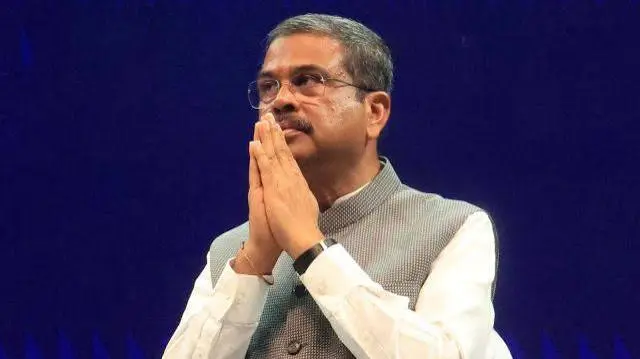
The resignation of Union Education Minister Dharmendra Pradhan is more than a political development. It represents the collision of two powerful forces shaping modern India: the Modi government’s education reforms and the rise of a new generation of politically active youth.
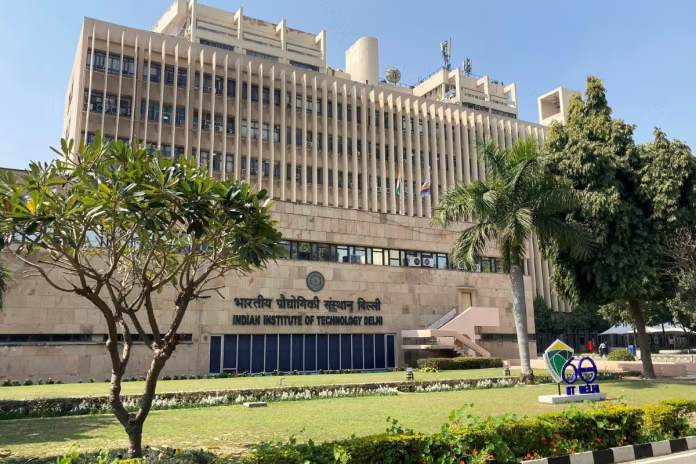
For nearly five years, Pradhan was the face of India’s education transformation. He oversaw the implementation of the National Education Policy (NEP) 2020, promoted skill-based learning, expanded digital education, strengthened Indian language education, and pushed Indian Knowledge Systems into mainstream academic discourse.
Yet, despite these ambitious reforms, it was the examination crisis and growing public anger over transparency that ultimately ended his tenure.
The Modi-Pradhan Vision: Reimagining Indian Education
When Prime Minister Narendra Modi unveiled the National Education Policy, the objective was clear: move India away from rote learning and build an education system focused on innovation, critical thinking, skills, and employability.
Under Pradhan’s leadership, the government attempted to:
- Implement NEP 2020 nationwide
- Promote vocational and skill-based education
- Increase the use of technology in classrooms
- Encourage learning in Indian languages
- Expand digital learning platforms
- Integrate Indian Knowledge Systems into higher education
- Develop PM SHRI model schools across the country
Supporters argue that for the first time in decades, Indian education began moving beyond exam scores and degrees toward skills and innovation.
The History Debate: Changing What India Teaches
One of the most debated aspects of recent education reforms has been curriculum revision.
Supporters claim that previous educational frameworks disproportionately emphasized colonial narratives and certain historical periods while giving limited attention to many Indian dynasties, philosophers, scientists, reformers, and indigenous traditions.
The new curriculum sought greater inclusion of:
- Ancient Indian scientific contributions
- Indian mathematics and astronomy
- Regional kingdoms and empires
- Sanskrit and classical literature
- Indian philosophy and knowledge traditions
Critics, however, argued that history should be expanded rather than rewritten and warned against political influence in educational content.
This debate remains one of the defining ideological battles in modern Indian education.
Then Came the Crisis
No reform survives if students lose trust in examinations.
The cancellation of NEET-UG following question paper leak allegations triggered nationwide outrage. Millions of students and families questioned whether merit and hard work still mattered in India’s competitive examination system.
For many students, this was not simply about one examination.
It was about:
- Transparency
- Accountability
- Fairness
- Equal opportunity
The crisis rapidly evolved from an education issue into a national political issue.
The Rise of CJP: India’s Unexpected Youth Movement
Perhaps the most remarkable aspect of the crisis was the emergence of the Cockroach Janta Party (CJP).
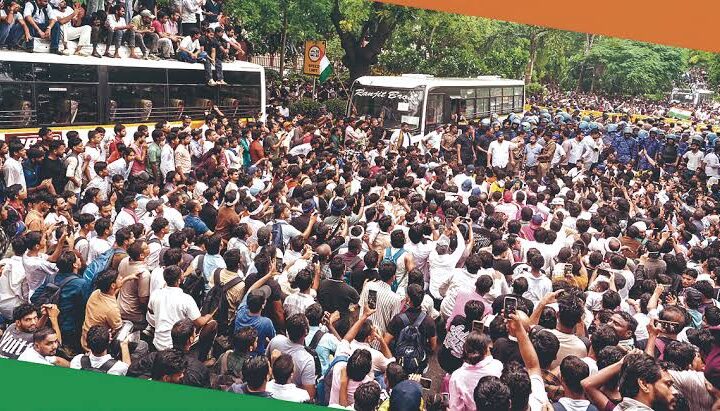
What began as a student-led movement soon transformed into one of the largest youth-driven protests seen during the Modi era. Thousands of students, young professionals, and first-time protesters joined demonstrations demanding accountability and examination reforms.
Unlike traditional political protests, CJP gained traction through social media, memes, grassroots mobilization, and Gen Z activism.
Their core message was simple:
“If students are expected to be accountable, governments must be accountable too.”
The movement sustained pressure for over a month, organized protests across multiple cities, and eventually forced the government to respond.
Whether one agrees with their methods or not, CJP demonstrated something Indian politics had not witnessed in years:
Youth can still influence national policy.
Interesting Reads
What CJI said on police excess, pellet guns and protesting ‘cockroaches’
Why Pradhan’s Resignation Matters
Ministerial resignations in India are rare.
That is why Dharmendra Pradhan’s resignation is being viewed as one of the most significant political developments of 2026.
The government did not merely accept a resignation.
It simultaneously announced:
- A major review of examination systems
- A reform task force led by Nandan Nilekani
- Tougher anti-paper leak measures
- New safeguards for national entrance examinations
The message from the government was clear:
The examination system must regain public trust.
The Political Impact
For the BJP, the resignation helps contain public anger and demonstrate accountability.
For the opposition, it is proof that sustained public pressure can force political action.
For CJP, it is a symbolic victory that has established the movement as a new force in youth politics.
For students, however, the larger battle remains unfinished.
A resignation does not automatically fix an examination system.
Only structural reforms can do that.