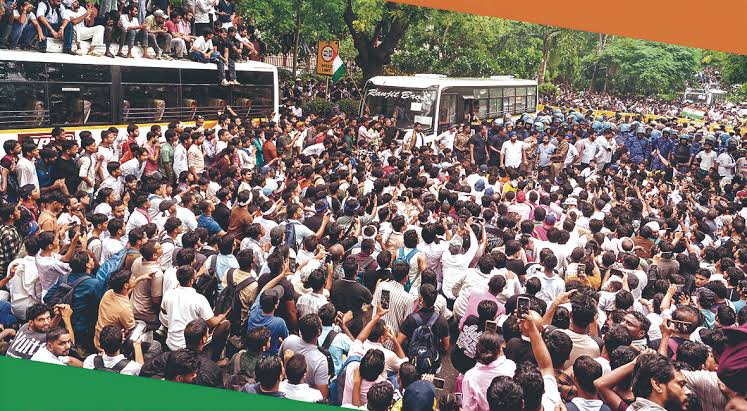
The ongoing protests led by the Cockroach Janta Party (CJP) have transformed into one of the most significant student-led movements in recent years. What began as outrage over the alleged NEET paper leak has now evolved into a nationwide campaign demanding accountability, examination reforms, justice for affected students, and the resignation of Union Education Minister Dharmendra Pradhan.
The movement has drawn support from students, opposition leaders, activists, and civil society groups across India. Demonstrations at Delhi’s Jantar Mantar, hunger strikes, negotiations with the Centre, political interventions, police action, and widespread public debate have kept the issue at the forefront of national discourse.
As of July 25, 2026, the situation remains fluid. While the government has provided written assurances on some demands and initiated dialogue with protest leaders, the agitation continues as protesters insist that their core demand—the resignation of the Union Education Minister—remains unresolved.
How the Movement Began
The roots of the current agitation lie in allegations surrounding irregularities and paper leaks in the NEET examination.
Thousands of students across India claimed that repeated examination leaks had destroyed public confidence in one of the country’s most important entrance examinations. Many argued that years of preparation had been undermined due to alleged failures in maintaining examination integrity.
Student organisations soon demanded:
- A transparent investigation
- Accountability within the National Testing Agency (NTA)
- Examination reforms
- Protection for whistleblowers
- Justice for affected candidates
- Action against those responsible
As frustration mounted, protests spread across multiple states before converging in the national capital.
Jantar Mantar Becomes the Centre of the Movement
Delhi’s Jantar Mantar has become the symbolic headquarters of the protest.
Thousands of students gathered demanding systemic reforms instead of temporary solutions.
Unlike earlier demonstrations that focused solely on the examination itself, this movement has broadened into a campaign about transparency, accountability, and trust in India’s public examination system.
Throughout the protests, volunteers have organised food distribution, medical assistance, legal aid, and public awareness campaigns.
Many participants describe the movement as one that represents students from every part of India rather than any single political ideology.
Sonam Wangchuk’s Hunger Strike
Environmental activist Sonam Wangchuk emerged as one of the most prominent faces associated with the movement.
His indefinite fast became a focal point of national attention.
After fasting for 26 days, Wangchuk ended his hunger strike following written assurances from the Central Government regarding certain demands.
However, he later clarified that:
- No final agreement had been reached.
- The protest movement would continue.
- Student interests remained the top priority.
- Peaceful protesters should not face legal action.
He also rejected criticism that ending the fast meant abandoning the movement.
According to Wangchuk, negotiations are only meaningful if they result in concrete reforms rather than symbolic promises.
What the Government Has Agreed To
Following discussions with protest representatives, the Centre reportedly provided written assurances on several issues.
Among them were:
1. No Action Against Peaceful Protesters
The government indicated a positive approach toward ensuring that peaceful demonstrators would not face criminal prosecution.
This assurance was considered one of the major outcomes of the negotiations.
2. Parliamentary Discussion
The Centre also reportedly agreed to hold detailed discussions in Parliament regarding:
- Examination reforms
- Paper leaks
- Future recruitment processes
- Strengthening testing systems
This was viewed as recognition that examination-related issues require structural reforms rather than isolated administrative measures.
3. Compensation
The government also expressed willingness to positively consider compensation for families of students who allegedly died by suicide following the controversy surrounding examination irregularities.
However, protesters continue to seek formal written commitments regarding compensation mechanisms.
The Core Demand Remains Unresolved
Despite these developments, protest leaders insist that their primary demand has not been accepted.
That demand is the resignation of Union Education Minister Dharmendra Pradhan.
According to CJP spokesperson Ashutosh Ranka:
“We need a Yes or No answer.”
The organisation argues that leadership accountability is essential before meaningful reforms can begin.
Third Round of Talks
Government representatives have confirmed that another round of discussions is scheduled.
The third meeting is expected to focus on:
- Ministerial accountability
- Implementation of promised reforms
- Compensation
- Legal protections
- Long-term examination reforms
Both sides have indicated willingness to continue dialogue.
However, protesters have warned that failure to resolve the central demand could intensify the movement.
Allegations Against Delhi Police
One of the biggest controversies surrounding the protest has been allegations regarding police action.
CJP leaders claim:
- Students were stopped from reaching Jantar Mantar.
- Food supplies were blocked.
- Volunteers were detained.
- Multiple checkpoints were established.
- Protesters were prevented from entering central Delhi.
The party also alleged excessive use of force during earlier demonstrations.
Facial Recognition Row
Delhi Police reportedly stated that Facial Recognition System (FRS) cameras had identified more than 2,000 people with criminal backgrounds who attended the protests.
The announcement immediately triggered political debate.
CJP responded strongly.
Party spokesperson Ashutosh Ranka said the organisation would also prepare a public list of police personnel accused of excessive force during protests.
According to the party, public testimony rather than surveillance technology would be used to identify officers accused of misconduct.
These competing claims have added another layer of controversy to the protests.
Interesting Reads
Rahul Gandhi Extends Support
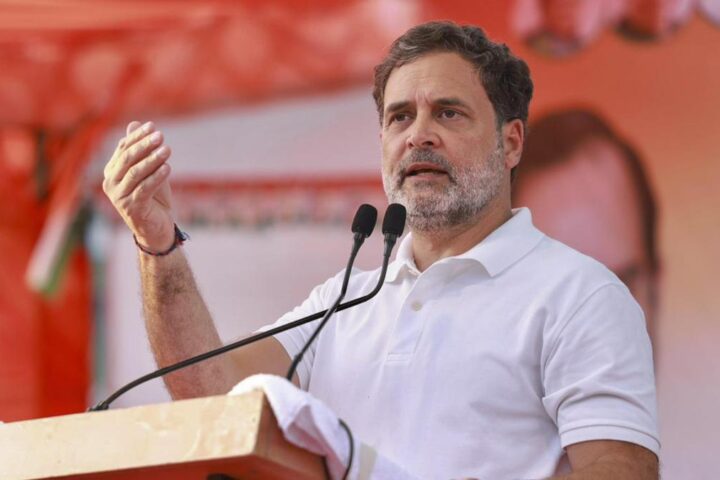
Leader of the Opposition Rahul Gandhi has openly backed the students’ movement.
He described the three principal demands as “non-negotiable.”
Gandhi strongly criticised speculation that the Education Minister might simply be shifted to another ministry instead of removed from office.
He argued that such a move would not satisfy students seeking accountability.
In another statement, Gandhi criticised restrictions imposed around the protest site, saying authorities had attempted to shut down transport, roads, internet access, and public services while failing to prevent examination paper leaks.
His remarks significantly amplified the political attention surrounding the protests.
Mamata Banerjee Expected to Join
Former West Bengal Chief Minister Mamata Banerjee is expected to visit Jantar Mantar to express solidarity with protesting students.
Her proposed participation demonstrates how the agitation has expanded beyond student organisations into a broader political issue.
Opposition parties increasingly portray the movement as a national campaign for educational accountability.
TMC Criticises Security Measures
Trinamool Congress MP Sagarika Ghosh criticised extensive security arrangements around central Delhi.
She alleged that:
- Metro stations were closed.
- Roads were blocked.
- Internet services faced restrictions.
- Food supplies were disrupted.
- Protesters experienced excessive policing.
The government has not accepted these allegations.
Metro Closures Across Delhi
The Delhi Metro Rail Corporation temporarily closed 18 stations beginning Saturday morning.
Although interchange facilities remained available at selected stations, the closures significantly affected movement around central Delhi.
Officials cited security requirements surrounding the protest.
The move generated criticism from several opposition leaders who argued that it inconvenienced ordinary commuters while restricting access to the demonstration.
Bihar Bandh Expands the Movement
The agitation has spread beyond Delhi.
In Bihar, members of the All India Students’ Association (AISA) organised demonstrations and road blockades demanding:
- Justice in the NEET controversy
- Examination reforms
- Resignation of the Education Minister
The protests indicate growing national mobilisation around examination integrity.
Abhijeet Dipke Continues Despite Illness
CJP founder Abhijeet Dipke revealed that he had been diagnosed with typhoid.
Despite his illness, he announced that he would continue participating in the movement until the principal demand is addressed.
His statement has become another symbol of the determination shown by protest organisers.
Wangchuk Hospital Video Controversy
Another issue emerged after a video circulated showing Sonam Wangchuk arguing with officials at Safdarjung Hospital.
Authorities later stated the footage had been recorded while Wangchuk attempted to leave for another medical facility before court formalities had been completed.
Officials said they were awaiting legal documentation before permitting the transfer.
The clarification came after widespread speculation regarding the circumstances shown in the video.
RSS Chief’s Remarks Gain Attention
Although not directly commenting on the protest, RSS chief Mohan Bhagwat observed that today’s younger generation increasingly asks questions rather than accepting authority without explanation.
His remarks attracted attention amid ongoing student demonstrations focused on accountability and transparency.
Why Students Say This Movement Is Different
Participants argue that this protest differs from earlier student movements because it addresses systemic issues rather than a single examination.
Their demands include:
- Independent investigations
- Transparent examination systems
- Better digital security
- Stronger anti-paper leak mechanisms
- Accountability within examination agencies
- Faster grievance redressal
- Student representation in reforms
Many protesters argue that restoring trust is now more important than merely conducting examinations.
A Test of India’s Examination System
The controversy has reignited debate over India’s highly competitive entrance examination ecosystem.
Every year, millions of students compete for limited seats in medical colleges.
Even isolated allegations of paper leaks can have far-reaching consequences for public confidence.
Education experts argue that maintaining the credibility of national examinations is essential for ensuring equal opportunity.
The current protests have therefore become a larger discussion about institutional trust and governance.
What Happens Next?
Attention now turns to the third round of talks between government representatives and CJP leaders.
Key unresolved issues include:
- Whether the Centre will respond to demands regarding the Education Minister.
- The implementation timeline for examination reforms.
- Written commitments on compensation.
- Legal protection for protesters.
- Long-term structural reforms within India’s examination system.
If negotiations produce a mutually acceptable outcome, tensions may ease.
However, protest organisers have already warned that failure to address their core concerns could lead to wider demonstrations across the country.
Conclusion
The CJP-led protest has evolved into one of the most closely watched student movements in India, placing issues of examination integrity, accountability, and educational reform at the centre of national debate. While the government has offered written assurances on several demands and agreed to continue dialogue, protesters maintain that meaningful change requires both institutional reforms and accountability at the highest levels.
With opposition leaders lending support, demonstrations expanding beyond Delhi, and further negotiations scheduled, the coming days are likely to determine whether the movement transitions toward resolution through dialogue or enters a new phase of nationwide mobilisation. Regardless of the immediate outcome, the protests have already sparked a broader conversation about transparency, trust, and the future of India’s examination system.